

The Legal Framework: Federal Law No. 3 of 2016 (Wadeema’s Law)
The protection of children in the United Arab Emirates is firmly anchored in Federal Law No. 3 of 2016 on Child Rights, widely known as Wadeema’s Law. As reflected in the official publication, the Law was issued on 8 March 2016 and has been amended by Federal Decree-Law No. 33 of 2024 to further strengthen protective mechanisms. The Law establishes a comprehensive framework to safeguard every human being under the age of eighteen and enshrines the principle that the best interests of the child shall have priority in all decisions and actions affecting the child.

Key Definitions Under Wadeema’s Law
The Law begins by defining key concepts such as “Child,” “Child Abuse,” “Child Neglect,” and “Violence against Children.” Child abuse is broadly defined as any action or omission that harms the child or impedes his or her upbringing in a safe and healthy manner. Child neglect includes the failure of parents or custodians to take necessary measures to preserve the child’s physical, mental, and moral integrity. Importantly, the principle of the best interests of the child requires that the child’s welfare takes precedence over the interests of all other parties in any circumstance.
Fundamental Rights Guaranteed to Children
Wadeema’s Law guarantees fundamental rights including the right to life, security, nationality, parentage, education, healthcare, and privacy. It expressly prohibits arbitrary interference in a child’s life, harm to their reputation, and exposure to pornographic materials. The Law also criminalizes economic exploitation, hazardous child labour, and any conduct that may endanger a child’s physical, psychological, moral, or mental integrity.
Protection in Educational Institutions
In the educational context, the Law contains particularly important safeguards. Article 32 expressly bans all forms of violence in educational institutions and mandates the preservation of children’s dignity. Schools are required to implement structured complaint and reporting programs to ensure investigation of violations of educational rights. Bullying—whether physical, verbal, psychological, or cyber in nature—may fall within the broader prohibitions on violence, psychological harm, and conduct threatening a child’s integrity. Where bullying results in sustained emotional trauma, reputational harm, or physical injury, liability may arise under both child protection and criminal legislation.
Situations Considered a Threat to Child Integrity
The Law further provides a detailed list of situations that are considered threats to a child’s integrity, including habitual abuse, exposure to exploitation, neglect, homelessness, or failure of proper care. It strictly prohibits torture, cruelty, sexual exploitation, and exploitation for begging. The penalties for violations are severe. For example, certain offences relating to child pornography carry imprisonment of not less than ten years, while violations involving cruelty or psychological harm may attract imprisonment and substantial fines. The Law also prevents offenders convicted of sexual assault against children from working in positions involving direct contact with minors.
Child Protection Mechanisms and Reporting Obligations
One of the most significant aspects of Wadeema’s Law is the establishment of child protection mechanisms. Child protection specialists are empowered to intervene preventively and therapeutically where a child’s safety is at risk. In cases of imminent danger, a specialist may remove the child from a harmful environment and seek judicial authorization within 24 hours. Reporting abuse is mandatory for educators, physicians, and other professionals entrusted with childcare. The identity of reporters and victims is protected to ensure confidentiality.
Family Responsibility and Judicial Oversight
The Law also emphasizes family responsibility. Parents and custodians must provide a safe and cooperative family environment and are legally accountable for neglect or failure to protect. Courts may require detailed social and psychological reports before granting custody. Recent amendments allow rehabilitation and guidance programs to be imposed in certain cases involving parents or custodians, reflecting a balanced approach between accountability and corrective measures.
How Khairallah Advocates Can Help
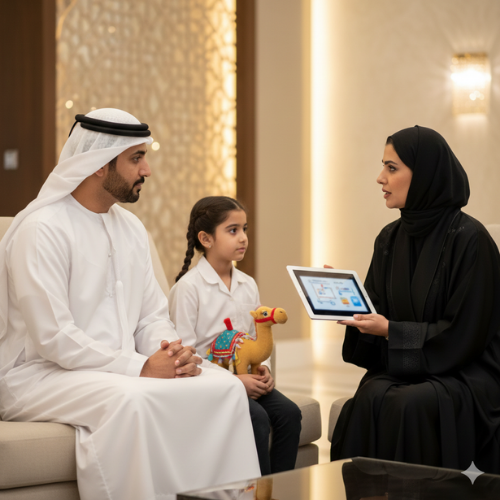
At Khairallah Advocates & Legal Consultants LLC, we have extensive experience handling sensitive matters involving children, including school bullying disputes, custody and guardianship proceedings, protective court applications, allegations of abuse or neglect, and representation before public prosecution and judicial authorities. Our firm approaches such matters with the highest level of discretion, empathy, and strategic legal precision, always guided by the statutory principle of the best interests of the child.
Ramadan Initiative: Pro Bono Consultations for Child Protection Matters
In recognition of this Year of the Family and in the spirit of compassion during the holy month of Ramadan, Khairallah Advocates & Legal Consultants LLC is pleased to offer pro bono legal consultations for child protection and bullying-related matters throughout Ramadan. We are also extending preferential representation fees for families seeking to initiate protective or legal proceedings. We firmly believe that financial limitations should not prevent access to justice where a child’s welfare is at stake.
Conclusion: Why Legal Guidance Matters
Children represent the foundation of a stable and prosperous society. Wadeema’s Law provides a robust legal framework for their protection, but effective enforcement depends on awareness, timely reporting, and professional legal guidance. Families facing concerns relating to bullying, abuse, neglect, custody disputes, or any matter affecting a child’s welfare are encouraged to seek immediate legal advice to ensure that their rights—and most importantly, the child’s rights—are fully safeguarded.
In recognition of this Year of the Family and in the spirit of compassion during the holy month of Ramadan, Khairallah Advocates & Legal Consultants LLC is pleased to offer pro bono legal consultations for child protection and bullying-related matters throughout Ramadan. We are also extending preferential representation fees for families seeking to initiate protective or legal proceedings. We firmly believe that financial limitations should not prevent access to justice where a child’s welfare is at stake
If you require further clarification or legal assistance concerning the matters discussed in this article, please do not hesitate to contact Khairallah Advocates & Legal Consultants LLC. Our lawyers would be happy to assist you.