
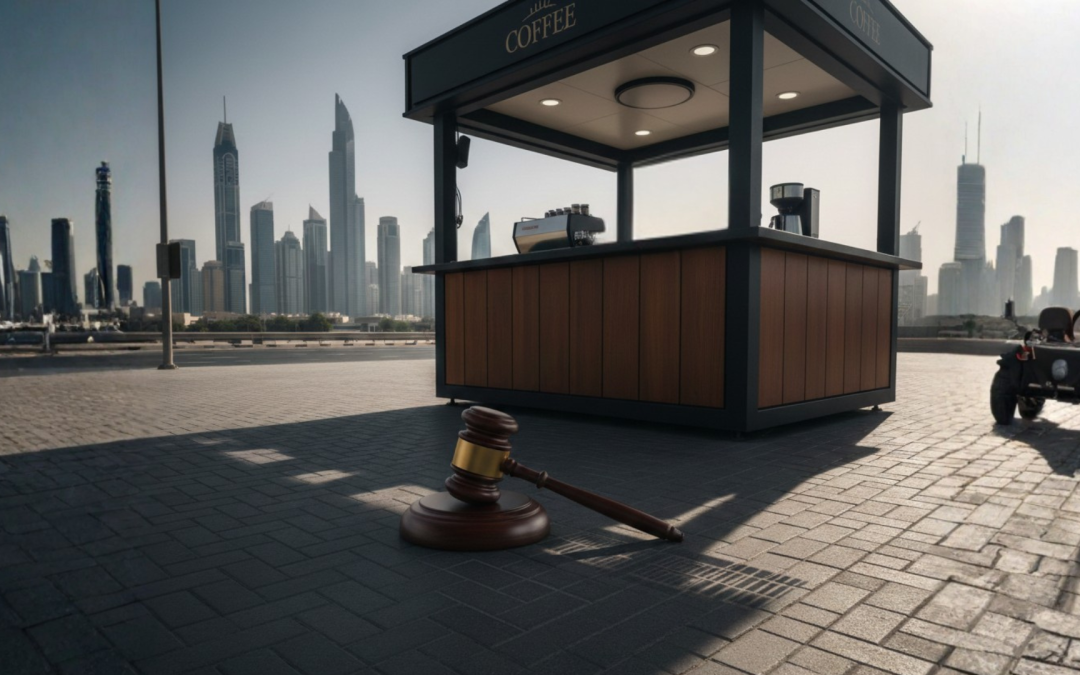
The Dubai Court of Cassation kiosk ruling 2026 (Commercial Appeal No. 27 of 2026) addresses a recurring legal question: are kiosks and similar structures considered movable assets, or do they qualify as real estate for the purpose of jurisdiction?
The Court’s ruling provides significant clarification on the distinction between Dubai Courts and the Rental Dispute Centre (RDC) in determining jurisdiction over lease-related disputes involving kiosks located within larger properties such as hotels and commercial premises.
Background of the Dispute
The dispute arose from a franchise agreement dated 4 April 2023 between a hotel owner and a limited liability company for the operation of a kiosk within the hotel lobby for real estate brokerage activities.

The agreement included a termination clause allowing the hotel to end the contract upon two months’ written notice. In April 2025, the hotel notified the operator of termination. When the kiosk was not vacated, the hotel filed a claim before Dubai Courts seeking:
- Termination of the agreement
- Eviction from the kiosk
- Compensation of AED 7,500,000
- Legal interest and costs
The defendants argued that the dispute was rental in nature and should fall under the exclusive jurisdiction of the Rental Dispute Centre (RDC), not Dubai Courts.
The Court of First Instance initially declined jurisdiction and referred the matter to the RDC. The Court of Appeal reversed this decision, holding that Dubai Courts had jurisdiction. The matter was then appealed to the Court of Cassation.
Key Legal Issue: Nature of the Kiosk
The central legal question addressed by the Dubai Court of Cassation kiosk ruling 2026 was whether the kiosk constituted:
- A movable asset, detachable and transferable without damage; or
- A real estate asset by designation under UAE law.
- The answer to this question directly determined jurisdiction.
Legal Framework Considered by the Court
The Court relied on several statutory provisions, including:
- Article 6 of Dubai Law No. 26 of 2007 (as amended) regulating landlord–tenant relationships
- Article 6 of Decree No. 26 of 2013 establishing the Rental Dispute Settlement Centre
- Article 102 of the UAE Civil Transactions Law (Federal Law No. 5 of 1985)
Under Dubai tenancy law, the RDC has exclusive jurisdiction over all rental disputes involving real estate located in Dubai.
Article 102 of the Civil Transactions Law provides that movable property placed by its owner on real estate for the service or exploitation of that real estate may be treated as immovable property by designation—even if it is not permanently attached.
The Court’s Analysis
The Court emphasized several critical principles:
Substance Over Form
Although the contract was titled a “Franchise Agreement,” the Court looked beyond its label. It found that the agreement effectively granted the operator the right to use specific premises for a defined period in exchange for rent. Therefore, in substance, it constituted a lease.
The Court reaffirmed that legal characterization depends on the true intention of the parties and the nature of the rights granted—not on the contract’s title.
Real Estate by Designation
The Court noted that:
- The kiosk was constructed by the property owner.
- It was placed within the hotel lobby.
- It served the commercial exploitation of the hotel.
- It was intended for continuity and commercial integration.
Even if technically removable, the kiosk was established for the service and exploitation of the hotel property.
Accordingly, under Article 102 of the Civil Transactions Law, it qualified as real estate by designation.
Exclusive Jurisdiction of the RDC
Because the dispute concerned a lease of real estate in Dubai, jurisdiction lies exclusively with the Rental Dispute Centre.
The Court of Cassation therefore:
- Overturned the Court of Appeal’s judgment.
- Confirmed that Dubai Courts lacked jurisdiction.
- Reinforced that rental disputes must be determined by the RDC.
Important Procedural Clarification
The Court also clarified that a judgment rejecting a jurisdictional objection constitutes an implicit ruling on jurisdiction and may be challenged independently before final judgment under Article 152 of the UAE Civil Procedures Law.
This procedural clarification is particularly significant for practitioners managing jurisdictional strategy in complex property disputes.
Practical Implications for Businesses and Property Owners
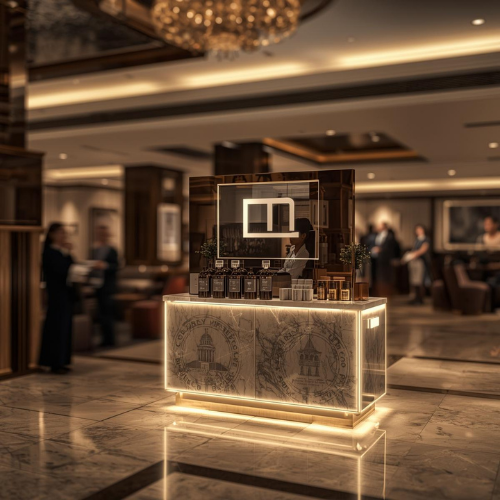
This ruling has substantial implications for:
- Hotels
- Shopping malls
- Commercial towers
- Developers
- Franchise operators
- Retail kiosk tenants
Key takeaways:
- Calling an agreement a “franchise” does not prevent it from being legally classified as a lease.
- Kiosks may be considered real estate if established to serve or exploit a property.
- Rental disputes involving such structures fall under RDC jurisdiction.
- Jurisdictional challenges must be carefully assessed at the outset.
- Mischaracterizing a contract can result in wasted time, duplicated proceedings, and unnecessary litigation costs.
Conclusion
The Dubai Court of Cassation kiosk ruling 2026 reinforces a well-established but often misunderstood principle in UAE law: the legal nature of property and contracts depends on substance, not form.
A kiosk located within a hotel may legally be treated as real estate by designation—even if physically detachable—when it serves the commercial exploitation of the property.
As a result, disputes arising from such arrangements fall under the exclusive jurisdiction of the Rental Dispute Centre, not Dubai Courts.
This judgment strengthens legal certainty in commercial leasing arrangements and highlights the importance of precise contractual drafting and strategic jurisdictional planning.
If you require further clarification or legal assistance concerning the matters discussed in this article, please do not hesitate to contact Khairallah Advocates & Legal Consultants LLC. Our lawyers would be happy to assist you.
Authors: