

Introduction
Procedural time limits are not mere technicalities; they are jurisdictional safeguards that determine whether justice can be accessed at all. In criminal litigation, missing an appeal deadline even by a single day may permanently extinguish a convicted person’s right to challenge an unjust judgment. Recognizing the seriousness of this issue, the General Assembly of the Dubai Court of Cassation issued a landmark interpretative decision in Challenge No. 11 of 2025, settling a long-standing practical controversy regarding how appeal deadlines are calculated in criminal cassation matters.
This ruling brings clarity, legal certainty, and procedural fairness to litigants and practitioners alike.
Legal Background
1. Statutory Time Limit for Cassation Appeals
Article 245(1) of the UAE Criminal Procedures Law provides that a cassation appeal must be filed within thirty (30) days:
- From the date of issuance of the judgment if it is in-person; or
- From the date of notification if the judgment is in absentia or deemed in-person
However, the law did not expressly clarify whether the day of issuance or notification itself should be counted within this thirty-day period, creating divergent court practices.
2. The General Rule on Calculation of Legal Time Limits
Article 335 of the same law establishes a general principle applicable across all branches of law:
When a time limit is calculated in days, months or years, the day of notification or the event giving rise to the time limit is not counted, and the period ends with the close of official working hours on the last working day.
This article functions as the master rule for computing all statutory deadlines unless a specific law provides otherwise.
The Central Legal Question
The Court was asked to clarify:
Should the day on which the criminal judgment is issued or notified be counted within the 30-day cassation appeal period, or should counting begin from the following day?

The Court’s Ruling: A Definitive Interpretation
The General Assembly resolved the issue decisively and unanimously:
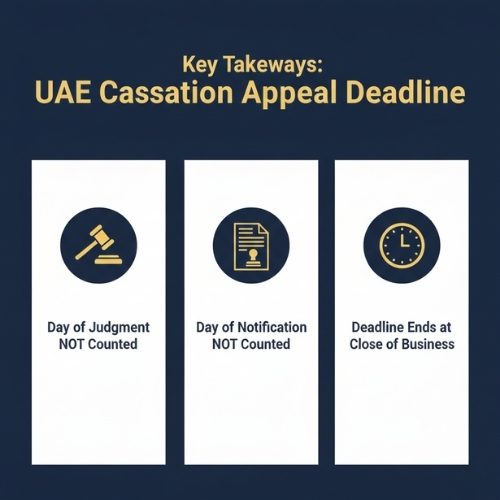
1. Day of Judgment Is Never Counted
Where a criminal judgment is issued in-person, the day of issuance itself is excluded from the calculation. The 30-day appeal period begins from the following day.
2. Day of Notification Is Never Counted
Where the judgment is in absentia or deemed in-person, the appeal period begins from the day following the date of notification, and the notification day itself must never be counted within the statutory time limit.
3. End of the Deadline
The appeal period expires at the end of official working hours on the final working day, not at midnight and not on non-working days.
Why This Decision Is Legally Significant
1. Establishes a Binding Interpretation
As a ruling of the General Assembly, this interpretation binds all lower courts. Conflicting calculations can no longer exist.
2. Protects the Right of Defense
This ruling reinforces constitutional and human-rights principles by ensuring that defendants receive the full statutory period to prepare cassation appeals without arbitrary truncation.
3. Eliminates Procedural Traps
Previously, litigants were unfairly exposed to technical dismissals caused by miscounting days. The judgment eliminates this procedural uncertainty and promotes fairness and predictability.
4. Harmonizes Criminal Procedure with General Legal Principles
The Court confirmed that Article 335 is the governing master provision for time calculations across all legal fields, including criminal appeals, unless explicitly displaced by special legislation.
Practical Guidance for Lawyers and Litigants
| Scenario | When the 30 Days Start |
|---|---|
| In-person criminal judgment | From the next day after issuance |
| In absentia / deemed in-person judgment | From the next day after notification |
| Deadline ends | At close of official working hours on last working day |
Conclusion
The 2025 General Assembly decision of the Dubai Court of Cassation stands as a milestone in UAE criminal procedural jurisprudence. It reinforces procedural justice, secures defendants’ rights, and ensures that statutory deadlines are interpreted in a manner consistent with fairness, certainty, and legislative intent.
For criminal litigators, compliance officers, and judicial bodies, this ruling is now the definitive authority governing the calculation of cassation appeal deadlines in the UAE.
If you require further clarification or legal assistance concerning the matters discussed in this article, please do not hesitate to contact Khairallah Advocates & Legal Consultants LLC. Our lawyers would be happy to assist you.
Authors: