
Introduction
The Emirate of Ajman has enacted a comprehensive legislative framework establishing a specialized Rental Disputes Center designed to centralize and modernize the adjudication of tenancy-related disputes. This reform represents a significant development in the emirate’s judicial and investment landscape, reflecting a broader national trend toward specialized judicial forums for commercial and property-related matters.
The new law creates a structured, self-contained system for resolving rental disputes, with defined jurisdiction, procedural mechanisms, appellate review, and execution authority. It replaces prior committee-based mechanisms and formally integrates the adjudicatory process within a judicially supervised institutional framework.
Creation of a Specialized Judicial Center
The legislation establishes a dedicated Rental Disputes Center operating within the judicial authority of the Emirate of Ajman. The Center replaces previously existing rental dispute committees and consolidates all tenancy-related claims under a single, specialized umbrella.
The intent behind the reform is clear: to provide a focused judicial environment capable of delivering efficient, expert, and commercially responsive decisions in rental disputes. By creating a centralized forum, the law enhances procedural consistency and legal certainty for landlords, tenants, and investors alike.
The Center is empowered to establish branches within the emirate, ensuring geographical accessibility while maintaining unified administrative oversight.
Exclusive Jurisdiction Over Rental Disputes
A core feature of the legislation is the conferral of jurisdiction upon the Center to hear disputes arising out of rental relationships, regardless of their value. This includes disputes related to lease agreements, eviction claims, rent adjustments, contractual breaches, and ancillary claims connected to tenancy arrangements.
The law emphasizes specialization by channeling rental matters exclusively through this forum rather than through general civil courts. This prevents fragmentation of jurisprudence and reduces procedural duplication.
At the same time, certain categories of contracts or disputes may be excluded or governed by separate legal regimes where expressly provided by law.
Structured Judicial Composition
The Center operates through two primary adjudicatory bodies:
- A First Instance Rental Committee
- An Appellate Rental Committee
The First Instance Committee hears disputes at the initial stage. Appeals are permitted before the Appellate Committee under defined conditions and thresholds. This two-tier structure ensures both procedural efficiency and judicial oversight.
The law further provides for administrative and procedural support mechanisms to facilitate case management, filings, notifications, and hearings.
Procedural Modernization and Digital Filing
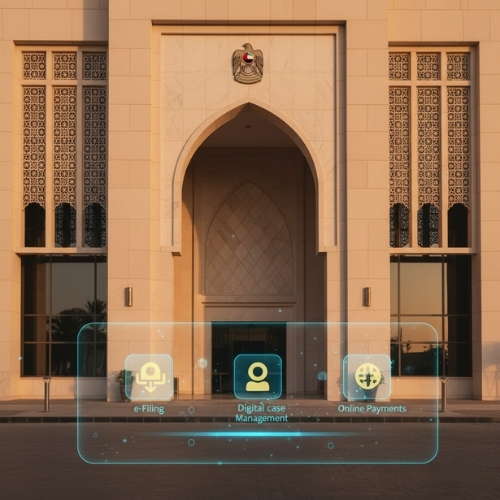
The framework reflects a strong orientation toward modern procedural efficiency. It provides for electronic filing mechanisms, digital communications, and structured case intake procedures.
The law authorizes the use of electronic means for submission of claims, documents, and communications. This modernization is consistent with broader UAE judicial digitization policies and supports faster case progression and reduced administrative burden.
Procedural timelines are embedded within the system to promote expeditious adjudication. The objective is to prevent rental disputes from lingering and disrupting property markets.
Urgent Applications and Provisional Measures
The Center is granted authority to adjudicate urgent applications and provisional measures. This includes requests for precautionary measures such as attachment, travel bans, or other interim relief when justified.
Such authority ensures that urgent rental disputes — particularly eviction or payment-related matters — can be addressed without undue delay.
Execution Powers
Importantly, the legislation confers execution authority upon the Center. Judgments issued by the Rental Committees are enforceable, and execution procedures may be carried out within the framework established by the law.
This integration of adjudication and execution functions strengthens the effectiveness of decisions and prevents procedural fragmentation between judicial and enforcement bodies.
Appeals and Cassation Structure
The law establishes clear appellate pathways. Decisions of the First Instance Rental Committee may be appealed before the Appellate Committee subject to statutory thresholds and procedural requirements.
In limited circumstances and depending on applicable federal procedural law, further judicial oversight mechanisms may exist. The structured appeal system reinforces due process safeguards while maintaining efficiency.
Administrative and Governance Framework
The legislation also provides for an internal governance structure, including:
- A General Assembly composed of judicial members
- A Director responsible for administrative management
- Support staff and technical personnel
- Financial and organizational oversight mechanisms
The Center maintains its own administrative organization, internal procedures, and reporting systems, while operating within the broader judicial architecture of the emirate.
Financial and Budgetary Provisions
The law includes provisions concerning fees, budget allocation, and financial administration. The Center is authorized to collect fees associated with claims and procedural services.
It operates under a defined financial structure aligned with governmental oversight. This ensures sustainability while preserving judicial independence in decision-making.
Judicial Independence and Impartiality
The legislation reinforces the independence of committee members and decision-makers. Judges and adjudicators are subject to constitutional and statutory guarantees ensuring impartiality.
The Center’s decisions are issued in the name of the Ruler, reflecting sovereign judicial authority within the Emirate of Ajman.
Repeal of Conflicting Provisions
The enactment expressly repeals prior regulatory frameworks governing rental dispute committees to eliminate overlap and ensure legal clarity.
This consolidation provides a unified legal regime governing tenancy dispute in Ajman moving forward.
Broader Legal and Economic Impact
The establishment of a specialized Rental Disputes Center has significant implications for:
- Landlords and tenants seeking predictable enforcement of lease obligations
- Real estate developers and property investors requiring regulatory certainty
- Commercial leasing arrangements across residential and retail sectors
- The overall attractiveness of Ajman as a stable investment environment
By centralizing rental adjudication, reducing procedural delays, and modernizing filing systems, the reform strengthens confidence in the emirate’s legal infrastructure.
Conclusion
The creation of the Ajman Rental Disputes Center represents a structural judicial reform aimed at enhancing specialization, efficiency, and certainty in tenancy litigation.
The law achieves several strategic objectives:
- Exclusive and specialized jurisdiction over rental disputes
- Streamlined digital procedures
- Structured appellate oversight
- Integrated execution authority
- Clear governance and financial mechanisms
For property stakeholders, the message is clear: tenancy disputes in Ajman will now be handled through a dedicated, professionally structured, and procedurally modern judicial framework.
As the UAE continues refining specialized dispute resolution systems across various sectors, Ajman’s Rental Disputes Center stands as a significant example of targeted legal modernization aligned with economic development goals.
If you require further clarification or legal assistance concerning the matters discussed in this article, please do not hesitate to contact Khairallah Advocates & Legal Consultants LLC. Our lawyers would be happy to assist you.
Authors: